


When we speak of squatter settlements and slum communities, they are most often situated in bursting-at-the-seams megacities, which are largely in the developing world. But a few of the largest global cities are, of course, in industrialized nations. Take Tokyo, one of the most densely populated metropolises on earth. Here, too, the homeless have been innovating their way into housing solutions, a fact that architect Kyohei Sakaguchi knows well.

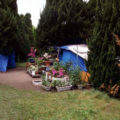
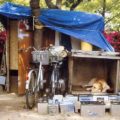
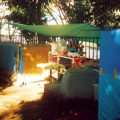
Sakaguchi’s 2004 book, Zero Yen Houses, catalogued the temporary and semi-permanent shelters of Japanese city dwellers who cannot afford homes (hence the name, Zero Yen). On September 23, a new Sakaguchi exhibition will open at the Vancouver Art Gallery. The installation will include a replica of a Tokyo homeless shelter as well as materials from Sakaguchi’s more formal architectural background.
This article characterizes Zero Yen Houses like this:
“The homes [are] carefully built, meticulously kept and collapsable for quick movement when the police move in […] Fans are inspired by the homes’ design and functions: elaborate triangular roofs, or intricate networks of metal piping to keep the structure standing. [Or] a home powered by solar batteries.
“Even to the untrained eye, the homes of Japan’s homeless are remarkably well-built and cared for. Some are fitted with traditional Japanese tatami mats; others boast extensive gardens with neatly trimmed camellias and bonsai shrubs.”
We don’t want to romanticize the lifestyle of the urban homeless, but there’s something incredibly charming about some of these makeshift habitats. If you’re in or near Vancouver, this is likely worth a trip.
+ Vancouver Art Gallery


