


Start Slideshow


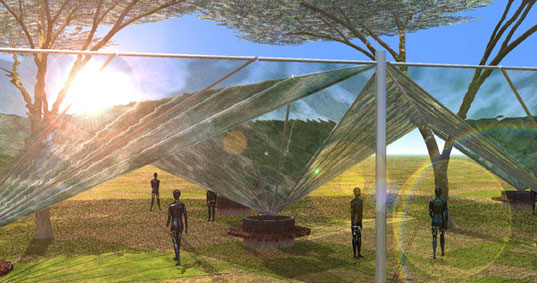


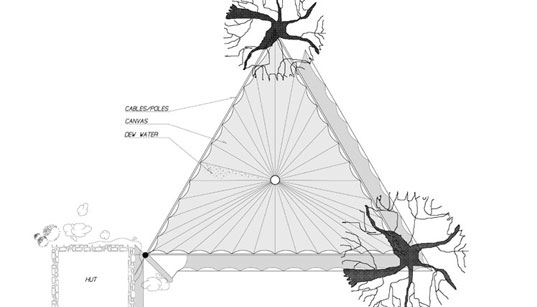
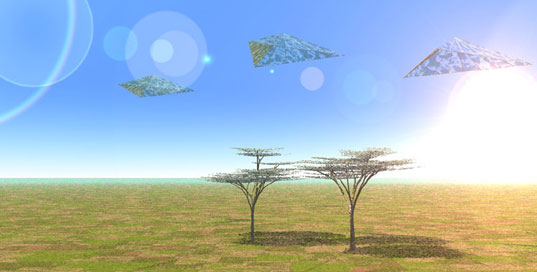
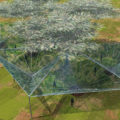
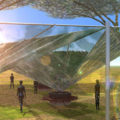
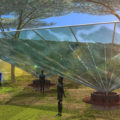
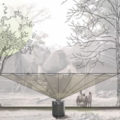
 WatAir2With an estimated 5,000 children dying daily due to dirty drinking water, Joseph Cory and Eyal Malka's award-winning WatAir design for Arup and WaterAid’s drawn water challenge might be the response barren landscapes are looking for. Simply described, WatAir produces water from the air through its inverted pyramid array of panels. Inspired by spiderwebs and the dew-catching properties of leaves, WatAir is easy to incorporate into both rural and urban landscapes due to its relatively small footprint....<br><br><a href='https://inhabitat.com/watair-turning-air-into-water/'>READ ARTICLE</a>1
 WatAir3With an estimated 5,000 children dying daily due to dirty drinking water, Joseph Cory and Eyal Malka's award-winning WatAir design for Arup and WaterAid’s drawn water challenge might be the response barren landscapes are looking for. Simply described, WatAir produces water from the air through its inverted pyramid array of panels. Inspired by spiderwebs and the dew-catching properties of leaves, WatAir is easy to incorporate into both rural and urban landscapes due to its relatively small footprint....<br><br><a href='https://inhabitat.com/watair-turning-air-into-water/'>READ ARTICLE</a>2
 WatAir4With an estimated 5,000 children dying daily due to dirty drinking water, Joseph Cory and Eyal Malka's award-winning WatAir design for Arup and WaterAid’s drawn water challenge might be the response barren landscapes are looking for. Simply described, WatAir produces water from the air through its inverted pyramid array of panels. Inspired by spiderwebs and the dew-catching properties of leaves, WatAir is easy to incorporate into both rural and urban landscapes due to its relatively small footprint....<br><br><a href='https://inhabitat.com/watair-turning-air-into-water/'>READ ARTICLE</a>3
 WatAir5With an estimated 5,000 children dying daily due to dirty drinking water, Joseph Cory and Eyal Malka's award-winning WatAir design for Arup and WaterAid’s drawn water challenge might be the response barren landscapes are looking for. Simply described, WatAir produces water from the air through its inverted pyramid array of panels. Inspired by spiderwebs and the dew-catching properties of leaves, WatAir is easy to incorporate into both rural and urban landscapes due to its relatively small footprint....<br><br><a href='https://inhabitat.com/watair-turning-air-into-water/'>READ ARTICLE</a>4
 WatAir6With an estimated 5,000 children dying daily due to dirty drinking water, Joseph Cory and Eyal Malka's award-winning WatAir design for Arup and WaterAid’s drawn water challenge might be the response barren landscapes are looking for. Simply described, WatAir produces water from the air through its inverted pyramid array of panels. Inspired by spiderwebs and the dew-catching properties of leaves, WatAir is easy to incorporate into both rural and urban landscapes due to its relatively small footprint....<br><br><a href='https://inhabitat.com/watair-turning-air-into-water/'>READ ARTICLE</a>5
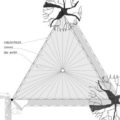 WatAir7With an estimated 5,000 children dying daily due to dirty drinking water, Joseph Cory and Eyal Malka's award-winning WatAir design for Arup and WaterAid’s drawn water challenge might be the response barren landscapes are looking for. Simply described, WatAir produces water from the air through its inverted pyramid array of panels. Inspired by spiderwebs and the dew-catching properties of leaves, WatAir is easy to incorporate into both rural and urban landscapes due to its relatively small footprint....<br><br><a href='https://inhabitat.com/watair-turning-air-into-water/'>READ ARTICLE</a>6
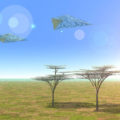 WatAir8With an estimated 5,000 children dying daily due to dirty drinking water, Joseph Cory and Eyal Malka's award-winning WatAir design for Arup and WaterAid’s drawn water challenge might be the response barren landscapes are looking for. Simply described, WatAir produces water from the air through its inverted pyramid array of panels. Inspired by spiderwebs and the dew-catching properties of leaves, WatAir is easy to incorporate into both rural and urban landscapes due to its relatively small footprint....<br><br><a href='https://inhabitat.com/watair-turning-air-into-water/'>READ ARTICLE</a>7
