Inhabitat


IS IT GREEN?: Clorox Green Works

by Evelyn Lee, 08/12/09

Natural Cleaning products, Clorox, Green Works

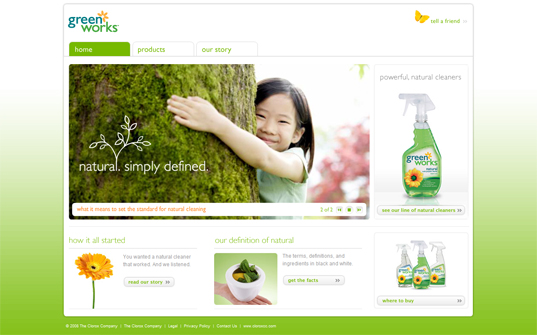
Launched in January of 2008, Clorox’s line of natural cleaning products, Green Works, currently holds more than a 40% share of the natural home cleaning market. The first year success of their product single-handedly grew the natural cleaning product market by more than 80% in one year by selling Green Works through their current distribution chain in more than 24,000 stores alongside their regular household cleaning products. However the question remains, is Green Works truly green? Critics argue that since no industry standard definitions currently exist for natural cleaners, Green Works is simply deeming itself green against its own standards – a dangerous trend to set. Read on to find out more.


Natural Cleaning products, Clorox, Green Works

According to their website, Green Works sets their own very stringent standards to ensure that their cleaners are at least 99% natural – a.k.a. coming from renewable resources, being biodegradable and free of petrochemicals. They attribute the 1% to synthetic ingredients including a preservative and green coloring but are working to find alternatives to be able to claim that the line is 100% natural. On the other hand, because no standard exists, those who are on the lookout for product authenticity question the use of corn-based ethanol which has a larger greenhouse gas footprint than petrochemicals, as well as the use of coconut oil, which contributes to rainforest habitat destruction. Clorox has done their best to remain openly transparent about the ingredients in their Green Works line by publishing their ingredients on the product and responding to such questions online at their blog and through their Shades of Green Journal.

Natural Cleaning products, Clorox, Green Works

So where’s the rub, you ask? As stated on their Shades of Green blog, “The Green Works brand stands for powerful cleaning done naturally and we have stayed true to that promise. Our proposition is aimed at the mainstream consumer who is interested in natural products that clean, are affordable and easily accessible. We are achieving our goal to mainstream natural cleaning.” The company has delivered on their promise to bring natural cleaners into the forefront at a 15-20% premium over their natural competitors that are often carried at a 50-100% premium. On the other hand, if it weren’t for the success of their product, it’s questionable whether or not Clorox would continue to carry their natural line unless it continued to drive their bottom line – which doesn’t tend to sit well with those who are constantly on the lookout for a more sustainable product. Despite their commitment to their natural product line, Green Works, Clorox has done little as a company to internalize their sustainable chatter into their overall operations and product manufacturing.

Natural Cleaning products, Clorox, Green Works

IS IT GREEN?

The simple answer is yes. Green Works is a product that can, for the most part, claim truthfully that their product is 99% natural. On the other hand, those looking for cradle to cradle operations and a company whose foresight is focused on a more sustainable future may want to look elsewhere. After all, in the end Clorox will always be a bleach company that is driven by the success of their products and the bottom line.

+ Clorox
+ Green Works
+ Shades of Green

Related Posts

11 Responses to “IS IT GREEN?: Clorox Green Works”

earthsaver

On the Cradle to Cradle and sustainable foresight end of the spectrum, lots of great green news for EcoLogic Solutions. http://ecologicsolutions.com/pdf/ELSImprovements809.pdf

russ
russ Says:

I thought coconut oil came from the harvested nuts – does it not?

User Gravatar
ajsp Says:

Any company needs to be driven by the success of their products and the bottom line. A business that can’t make enough money to stick around isn’t a sustainable business. Environmentalists need to find ways to work with mainstream business, not dismiss them for being mainstream or profit-driven.

User Gravatar

A great question is raised quietly in the article about Clorox Green Works “Is it Green”. At the very end of the article Ms. Lee, the author, points out that Clorox is “driven by the success of their products and the bottom line”.

As a consumer products company, owned by stockholders, what other definition of success is there? Without the sales of its products, Clorox would cease to exist. Without putting dollars on the bottom line, Clorox becomes a non-profit, of no value to shareholders in the existing Return on Investment way of thinking (think of your 401k or IRA).

I would argue the primary responsibility of every consumer products company is to sell its products. It’s important to appreciate what I have come to call the “displacement theory” of green product purchases. For every purchase of GreenWorks, one less bottle of a fully petro-chemical based product is purchased. There is no cleaner thatt is “eco-perfect” unless you grow your own fruit and make your own cleaners from the vinegars that you make from some sort of green heat source at your home. Given that reality, Clorox’ Green Works represents significant eco-progress toward what may eventually become full displacement of all petro based cleaners. Wouldn’t that be a fine day!

User Gravatar
jahg8r Says:

While I agree that it would be nice if the company were a “cradle to cradle operation,” it is the fact that it is a bleach company that has made Green Works so successful. Environmentally friendly cleaning products have been around for a long time, but the vast majority of consumers have chosen products like Chlorox because they trust them to clean. It doesn’t do any good for a company to be green if consumers aren’t buying the product. The Chlorox name has done a great deal to convince people to give green a try. So while it’s likely they wouldn’t have kept the line if it weren’t successful, it’s also likely that the line wouldn’t have been as successful if it didn’t come from a known bleach company.

User Gravatar
doroshcu Says:

Check out Patagonia and read Let My People Go Surfing!! Businesses can remodel their way of thinking to include the environment and Social aspects and continue to be successful and this from a clothing company.

User Gravatar

The really important questions remain unanswered. Let’s cut the green washing (pun intended) love fest for just a second and instead focus on the important issue. We don’t buy cleaners to benefit nature, we buy cleaners to clean. Anything else is entirely secondary.

So, the real question is: How well does Clorox Green Works products clean in comparison to other cleaning products? If we can determine that they clean as well or better than other products, then we can worry about how green they are.

Tom Larsen

If the simple answer is “yes”, why is there a need to seek the “rub”. No product is eco-perfect. All products have a “rub”. Why can’t we celebrate the fact that for every Green Works product purchase, one less petro-based product is sold? That’s a big win for planet earth.

The more the green thought leaders promote the “rub” the easier it is for the mass market of consumers to just not do anything. Ms. Lee writes about the success of products and bottom line. If Clorox sells 1 million units and makes money, guess what, they keep doing it. If they sell 1 million units and make no money, they stop. If they sell 10 units, they stop. The goal for any consumer products company is to sell its product. That’s the fundamental definition of a sustainable business – one that can pay its people and its suppliers. That’s actually a good thing and should be applauded.

Eco-progress is the goal. There is no eco-perfect. It does not exist. I applaud Clorox for bringing the alternative to the mainstream.

User Gravatar

since i do not live in a septic tank, i have never used that toxic stuff. warm soapy water and a rag and/or brush does it for me. that is green.

User Gravatar

Your article states that there is no industry standard for establishing the make-up of a green household cleaning product – this is wrong. Green Seal, an independent third party environmental standards organization, has a standard, GS-8, for household cleaning products. Companies can submit their product for testing and certification if it meets their strict environmental criteria. Is it green? The answer is easier than Clorox would make it out to be – get is certified under Green Seal GS-8. Done and done!

User Gravatar
Toms Says:

First of all on the front label thay claim 99% natural, on the ingrediants thay claim 99% water. What is the other 1%.

To answer Max Dricolls Green Seal question. Green seal is a group of washington DC attorneys who have turned a just cause into a profit center. Their certification is literally for sale and I am told their biggest contributor is the oil industry. Over 60 % of the greenseal cleaning products contain petro chemicals.

We need a truly non profit, affordable certifiaction process that maintains high standards for rating products on their ingrediants and the effect on the environment and not on the effect to their pocketbooks


Leave a Comment

Please keep your comments relevant to this blog entry. Email addresses are never displayed, but they are required to confirm your comments.

Please note that gratuitous links to your site are viewed as spam and may result in removed comments.

Add your comments

SIGN UP NOW

CURRENT USERS LOGIN

Lost your password?